
David Pead, CBE Marketing Network
The tone of the roundtable remained pragmatic as the discussion turned to technology. While investment in platforms, systems and automation is accelerating across the sector, there is still a gap between what these tools promise and how they are actually used in practice.
For manufacturers in particular, this gap between investment and behaviour is most visible around Product Information Management systems. These demand substantial time and resource to meet future expectations, while adoption across specifiers, merchants and installers remains slow.
Technology, data and the limits of automation
The sector is increasingly investing in platforms, systems and automation but still struggling with adoption, alignment and meaningful use.
“There’s no shortage of data in construction. The problem is actually using it properly.”
“You can spend months implementing a system and still struggle to get people to use it.”
“AI is useful, but people can spot automated content a mile off in this industry.”
Technology initiatives are often driven by compliance requirements, procurement expectations or internal pressure to modernise, rather than by clear user demand. As a result, marketing teams are frequently left managing the gap between what systems promise and how people actually behave.
“The business will say we need a new system, we’ll invest in it, and then you realise that behaviour hasn’t changed at all.”
“We’ve put tools in place because we were told we needed them, not because the market was asking for them.”
This tension is particularly acute for manufacturers, where expectations around structured product data, transparency and accessibility are rising rapidly. Participants described investing significant time and resource into new platforms, while recognising that the wider supply chain may not yet be ready to engage with them fully.
“We’re being asked for more and more structured information, but the industry isn’t always equipped to consume it in that way.”
Product information management: investment ahead of adoption
The gap between investment and adoption became particularly clear in the discussion around Product Information Management. Several described long, resource-intensive PIM projects driven by regulatory pressure and client demand for structured, accessible data. However, adoption across the market remains inconsistent.
“We spent eighteen months implementing a new PIM system. It involved thousands of hours across lots of different people, and it’s still not being adopted.”
“It’s so hard for manufacturers to say, ‘You want it all, fine, we’ll put it all in place for you,’ and then realise that nobody’s actually using it.”
“We’re doing all this work to structure the data, make it compliant and accessible, but the market just isn’t ready to consume it in the way we expected.”
This was described as a fundamental tension. On one hand, regulation and procurement frameworks increasingly demand structured, up-to-date product information. On the other, specifiers, merchants and installers often lack the time, tools or training to engage with it fully.
“We’re being pushed to provide more and more data, but the people on the other end don’t necessarily have the systems or the appetite to use it properly.”
Marketing teams often find themselves caught in the middle, responsible for justifying the investment internally while also trying to encourage adoption externally.
“Marketing ends up explaining why we’ve spent this money and why it matters, even when the uptake is slower than anyone would like.”
The discussion highlighted a wider concern that the industry is building systems in anticipation of future behaviours, without yet resolving how those behaviours will realistically change. Until adoption improves across the supply chain, the value of PIM risks remaining unrealised, despite the scale of effort involved.
The value of peer forums
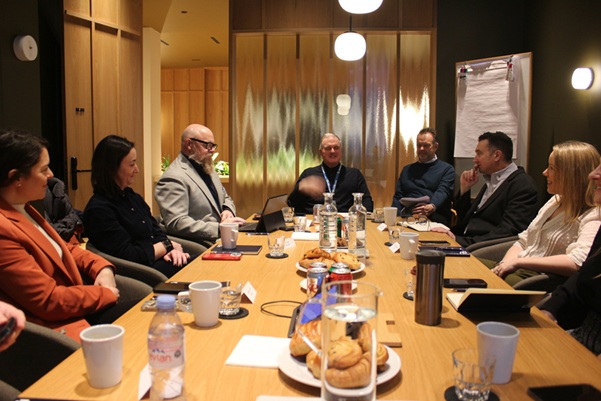
As the session drew to a close, the roundtable reflected on the value of having space to talk honestly about these tensions. With technology, regulation and commercial pressure all accelerating at once, the opportunity to test assumptions, share experience and compare realities with peers was seen as increasingly rare and increasingly valuable.
“It’s refreshing to be in a room where you don’t have to pretend everything’s brilliant.”
“You can feel quite isolated in your own organisation. It helps to hear that other people are dealing with the same things.”
“There’s a huge amount of experience in this room, and we’re only a small fraction of the people working in construction marketing.”
Several contributors noted that these kinds of discussions feel increasingly rare in a sector dominated by large events, presentations and sales-led interactions.
“This sort of conversation just doesn’t happen very often.”
“It’s useful to be able to say what’s actually difficult, not just what’s gone well.”
“There’s a lot of reassurance in hearing that others are wrestling with the same challenges.”
In a landscape where influence is shaped less by volume and visibility and more by credibility, judgement and trust, participants viewed smaller, peer-led forums as an essential way to test ideas, share experience, and move forward with greater confidence.
Roundtable participants
Liam Bateman (Chair), Managing Director, The Think Tank
Helen Cooper, Head of Marketing, Altecnic
Emma Cox, Head of Marketing, Watts Group Limited
Charmaine Dean, Marketing Manager, Catnic
Stuart Devoil, Group Head of Marketing, James Latham
Catherine Fyfe, Group Marketing Director, Genuit Group
James Hulme, Group Global Director of Communications, Broadway Malyan
Amy Law, Senior Marketing Manager, Eleco
Stacey Lucas, Commercial and Marketing Director, Sontay, & President of the BCIA
Gareth Osborne, Associate Marketing Director, Pick Everard
This is the fourth and final report from the Construction Marketing Roundtable, reflecting both the challenges discussed on the day and the value of having space for open, peer-level conversation in a changing sector.