

David Pead, CBE Marketing Network
Can trustworthiness be demonstrated through accreditation schemes and codes of practice, or can it only really be built over time through consistent behaviour, technical competence and transparency?
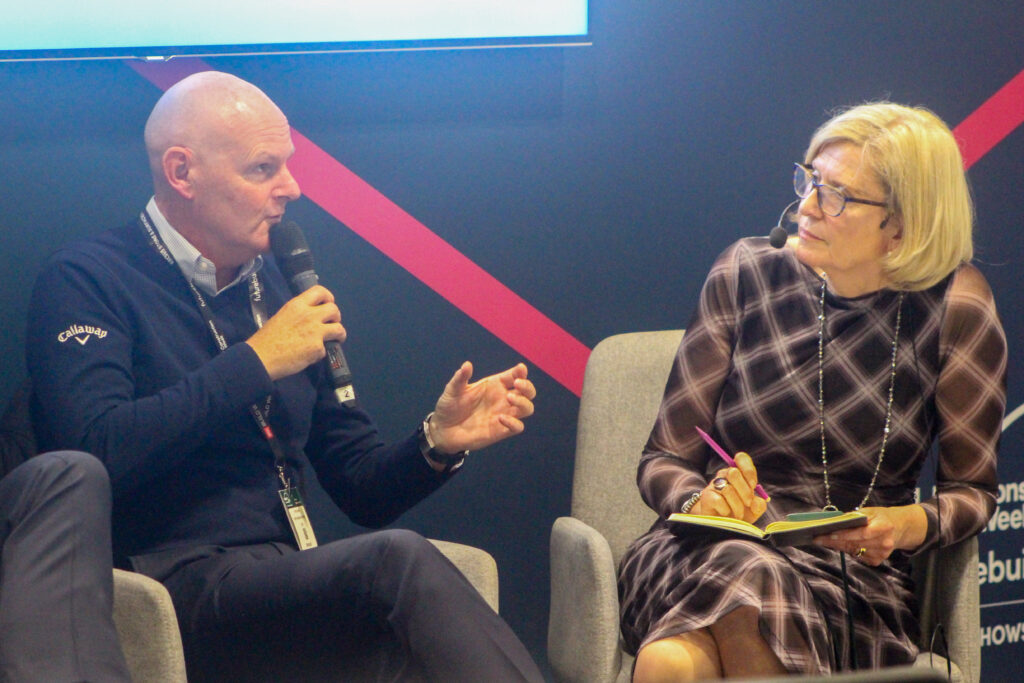
Duncan Grover, Technical Director at Schüco UK, had no doubts. “Trust is something that we feel is earned and not badged,” he said early in the third session curated by the CBE Marketing Network at UK Construction Week.
Chaired by Anna Hern, Joint Managing Director of Ridgemount, the discussion also featured Steve Marr, Chief Operating Officer of the Code for Construction Product Information (CCPI), Charlie Martin, CEO of the Anti-Greenwash Charter, and Louis Weir, Sustainability Manager at IKO.
The session explored how organisations maintain credibility at a time when technical claims, sustainability communications and marketing language all carry growing legal and reputational consequences.
Trust built over decades
Anna opened by framing the wider challenge facing the industry. Most people, she observed, are required to make decisions based on information produced by experts in fields they themselves may not fully understand. The question is how they determine whether that information can be trusted.
Steve explained that the CCPI emerged directly from the industry review process that followed the Grenfell tragedy and Dame Judith Hackitt’s subsequent report. Rather than certifying whether individual pieces of product information are technically correct, the CCPI focuses on the organisational culture and systems behind that information.
“The bulk of our assessment is around the culture of an organisation, and the quality of the product information management systems that give credibility to the information throughout its whole lifecycle,” he said.
The aim, he explained, is to distinguish organisations that have undergone rigorous third-party assessment from those that have not.
However, Duncan challenged the suggestion that robust processes are uncommon within the sector. “I would disagree strongly that organisations don’t have processes,” he said. “The construction industry is complicated, and our processes are necessarily complicated too.”
“We develop products that are third-party verified. Product information passes through product management, technical and marketing teams before publication.”
Duncan argued that trust is demonstrated through long-term performance, rigorous testing and the consistent ability to evidence product claims over time.
Louis pointed out that transparency itself is becoming commercially valuable. “A lot of this is about understanding where the value sits and where we can pass value on to our stakeholders,” he said. “Our focus has been on how we prioritise integrity of data and transparency as our biggest commercial asset.”

Sustainability and the problem of certainty
Louis suggested that frameworks such as the RICS Whole Life Carbon Assessment methodology are helping manufacturers communicate more clearly and consistently.
“Manufacturers can align their information more precisely to project needs,” he said. “That’s where sustainability communication becomes more specific and less vague.”
He also acknowledged the complexity of discussing sustainability honestly within sectors heavily reliant on carbon-intensive materials. Asked why he chose to work for IKO, given the roofing industry’s reliance on bitumen products, Louis responded candidly.
“Yes, bitumen is a huge part of our manufacturing process,” he said. “But bitumen has been used for thousands of years for waterproofing, and there currently aren’t many alternatives that offer the same durability and waterproofing performance.”
Rather than claiming perfection, Louis argued that sustainability should be understood as a process of continual improvement.
“We’re very transparent about that.” he said. “Sustainability for me is about continual improvement, not perfection.”
IKO, he explained, is investing £2 million in recycling infrastructure designed to recycle bitumen roofing products and reduce reliance on virgin materials.
Charlie argued that organisations need clearer governance around sustainability communications, particularly as expectations around ESG reporting continue to rise.
“One of the key things we require organisations to create is a green claims policy,” he said. “Organisations should acknowledge where they’re not as sustainable as they’d like to be.”
That includes clearly explaining the evidence behind sustainability claims, defining terminology consistently and ensuring staff understand where the boundaries lie.
“A lot of misinformation comes down to a lack of understanding, particularly within marketing and sales teams,” he said.
Who controls the message?
There is also a growing tension between the speed of modern communications and the need for technical oversight. Asked whether technical teams have veto power over marketing language, Duncan answered immediately.
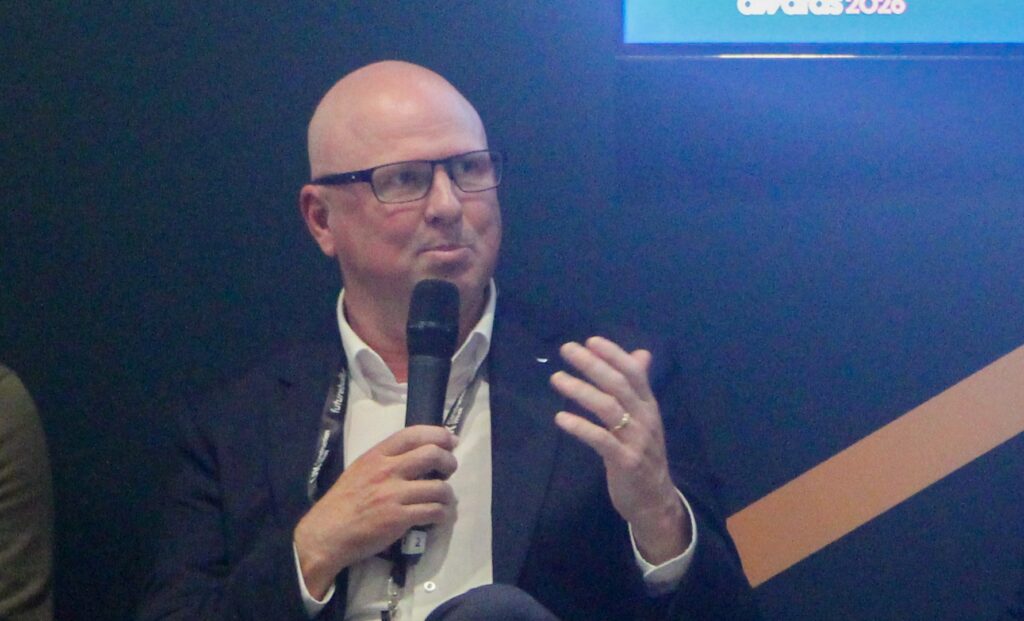
“In Schüco, technical always wins. Absolutely,” he said. “We cannot state something that our product cannot do. The risk is too high.”
The Building Safety Act, he added, has fundamentally changed the level of responsibility attached to product claims.
“If you make performance claims, you effectively become part of the design chain and therefore assume liability,” he said.
Steve said the CCPI places particular emphasis on the competency of everyone involved in handling technical information throughout its lifecycle, including sales and marketing teams, as well as the systems used to manage product information from creation through to publication.
Charlie suggested that formalised green claims policies can help organisations navigate the tension between rapid communications and technical governance by establishing clear rules around what can and cannot be said publicly.
Louis questioned who ultimately bears responsibility for policing breaches or misleading communications. “If there are breaches, who is responsible for reporting that?” he asked. “Who polices it?”
Charlie explained that the Anti-Greenwash Charter conducts periodic audits of campaigns and editorial processes, reviewing evidence such as internal approval systems and sign-off procedures.
He also referenced a forthcoming AI-supported tool called TruMark, designed to assess sustainability communications against regulatory frameworks before publication.

Trust in the age of AI
“We’ve seen the rise of fake news and competing versions of truth,” said Charlie. “We now need systems that help organisations demonstrate trustworthy communication practices.”
However, Duncan does not believe that the sector suffers from a widespread credibility problem. “I don’t think the construction industry is that bad,” he said. “Most of the industry is trying to do the right thing.”
Trust is still fundamentally built through long-term performance and demonstrated competence rather than external validation alone, he said.
Charlie agreed that many organisations already operate responsibly but argued that schemes such as the CCPI and Anti-Greenwash Charter are intended to help raise standards across the wider industry and apply pressure to poorer communicators.
Anna suggested that organisations build trust over time through consistency, transparency and demonstrable accuracy. But codes of practice and oversight schemes can still play an important role, particularly for organisations seeking to demonstrate credibility before they have established long-term reputations of their own.