
David Pead, CBE Marketing Network
Many clients still misunderstand how AI search actually works, according to Amelia Spence speaking during the fourth session curated by the CBE Marketing Network at UK Construction Week.
“One of the biggest misconceptions is that LLM search is just pulling information from their website,” she said. “In actual fact, it’s pulling information from all sources of referred traffic.”
That includes LinkedIn profiles, PR coverage, social media, backlinks, blogs and wider digital activity. As a result, Amelia argued that AI visibility depends less on isolated search tactics and more on maintaining a coherent and authoritative overall presence.
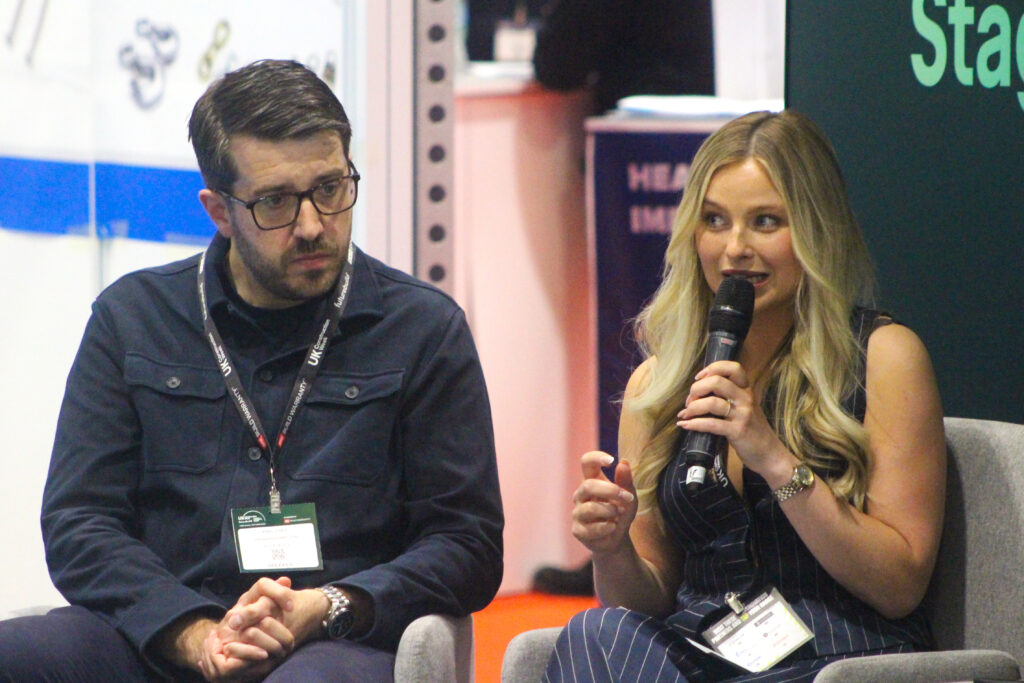
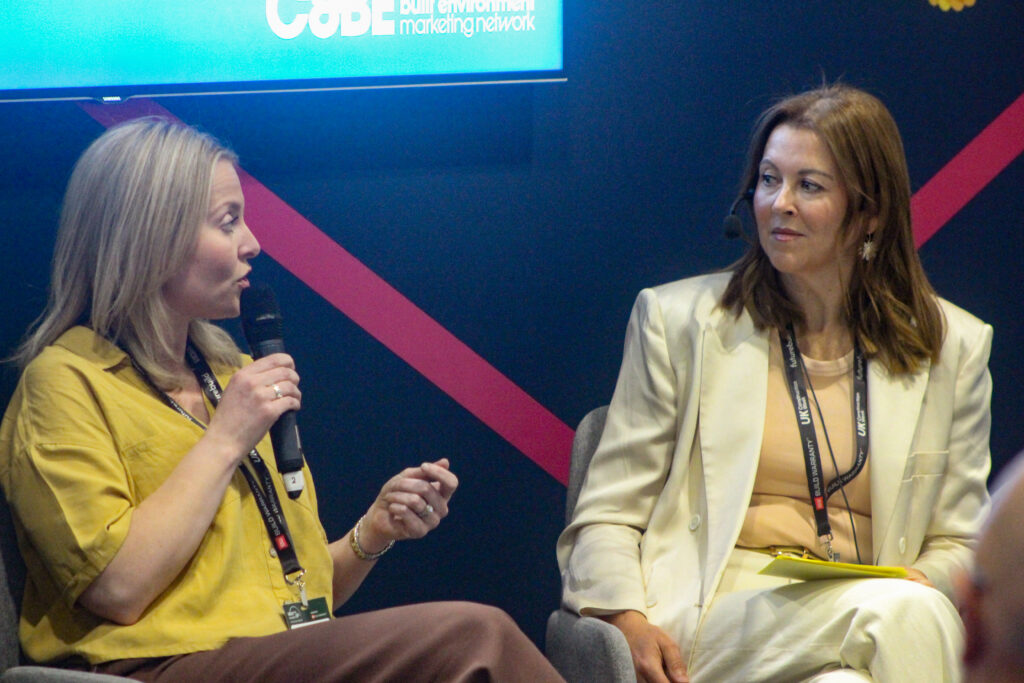
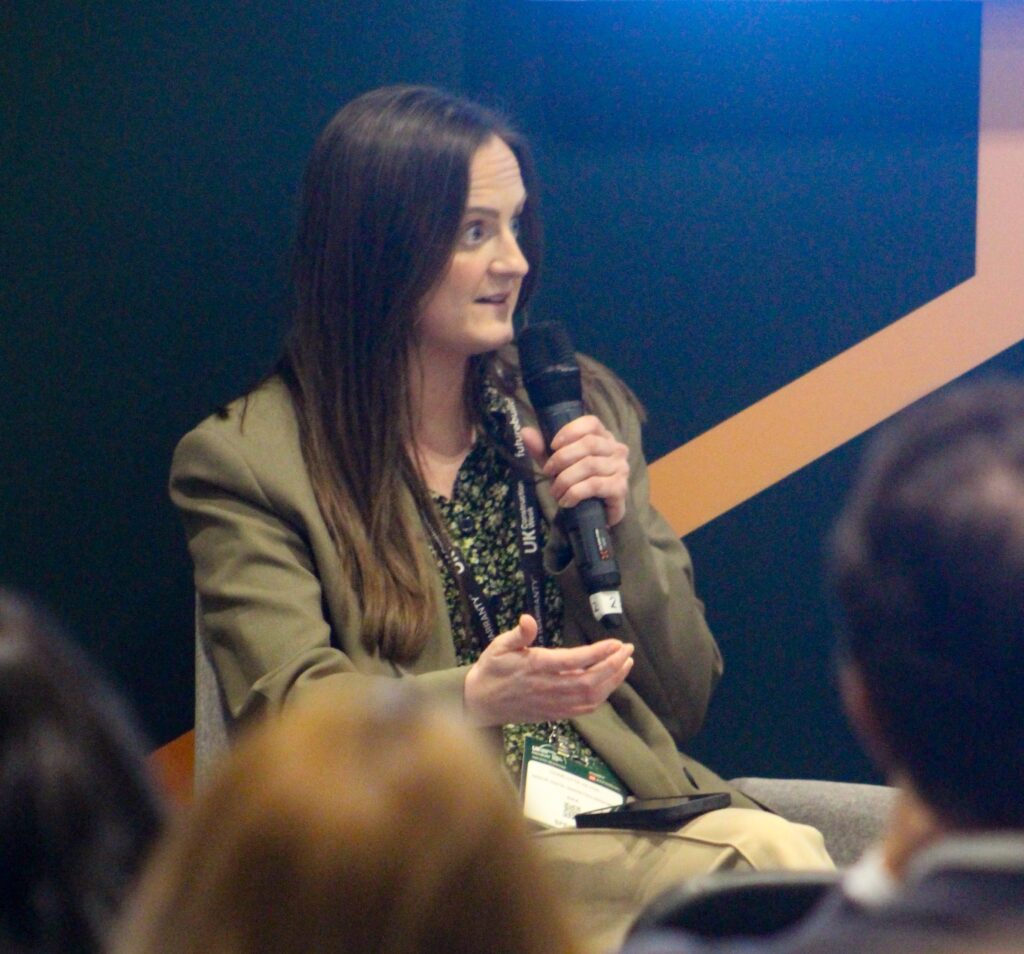
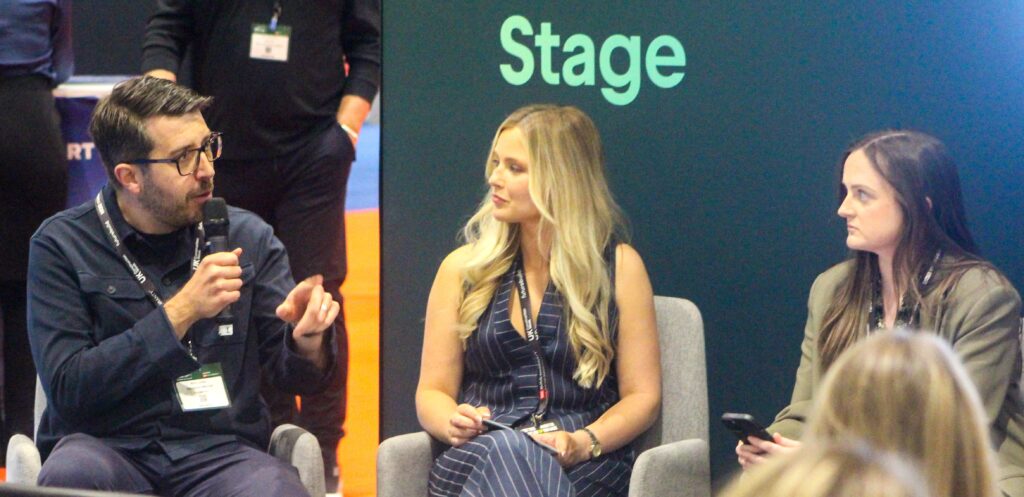
Chaired by Kate Perrin, Marketing Director at Barbour ABI, the session brought together Charlotte Hilton, Senior Digital Marketing and Communications Manager at Sika UK, Penny Howell-Jones, Marketing Director at Siderise, Ryan Jones, Managing Director of SLG Agency, and Amelia Spence, Managing Director of Fabrick Agency, to explore how AI, search and zero-click behaviour are reshaping construction marketing.
Visibility is changing, not disappearing
Charlotte argued that one of the biggest challenges facing manufacturers is ensuring technically complex information can still be surfaced clearly and accurately by AI systems.
Sika alone, she explained, operates across multiple business units, hundreds of products and a wide range of target markets, all managed by a very small digital team.
“It’s really difficult to keep up to date with the latest tools,” she said. “How do we help each of our strategic marketing managers to make sure that their systems and products are being found by the right people with the right messaging?”
The specification journey itself is also changing. Architects and specifiers increasingly arrive on manufacturer websites having already completed significant research through AI platforms and search tools.
“They already know what they’re looking for by the time they get on our website,” Charlotte said. “Our focus has got to be more on validating the information and making sure that when they do get to our site, that we’re the right people that they want to speak to and work with.”
Penny Howell-Jones suggested that the underlying pressures facing marketers are familiar, even if the technologies themselves are evolving rapidly.
“The expectation is that you’re an expert in all fields,” she said. “AI is a fantastic example of that. You sit there and think, okay, that’s the new one, so what’s next?”
At the same time, she argued that specification itself is becoming more evidence-driven, with greater scrutiny around technical compliance and substantiated claims.
“There’s definitely a more concerted effort around education, compliance and proof,” she said. “Specifiers want backed-up evidence from the manufacturer.”
The real opportunity for AI
Ryan Jones argued that marketers risk missing the real opportunity if they focus only on using AI to accelerate content production.
“This is game-changing industrial revolution-level stuff, and we’re using it to do LinkedIn posts slightly faster,” he said.
Instead, he believes AI should push marketers back towards deeper customer understanding, strategic planning and market orientation.
“We should be the people that understand our clients better than anyone in the organisation,” he said. Synthetic data, audience modelling and AI-assisted research tools now allow marketers to test strategies, routes to market and customer behaviours far more efficiently than before.
Amelia also challenged assumptions about the immediate commercial impact of AI search traffic.
“We’re getting clients saying, ‘We need a quick GEO strategy because it’s going to drive huge amounts of traffic’,” she said. “But actually, it’s only driving one to two per cent of traffic at the moment from LLM search.”
More concerning, she suggested, is the reliability of AI-generated answers themselves. Fabrick Agency recently tested more than 1,000 built environment queries across multiple large language models.
“ChatGPT only had a 58 per cent accuracy rating,” she said, particularly on technical topics including building regulations and fire safety. “Professional integrity and professional judgment are hugely valuable.”
Accuracy, governance and hallucinations
The discussion repeatedly returned to the risks associated with technical misinformation and AI “hallucinations”.
Asked how manufacturers can prevent AI systems from generating inaccurate technical specifications, Charlotte acknowledged that full control is impossible. Instead, she argued that the priority must be ensuring source material is robust and trustworthy.
“Our focus really is just to make sure that our content is rock solid,” she said. “That everything is accurate, correct, and we’re directing people in the best way possible.”
Sika has even developed an internal “CCPI bot” aligned with the Code for Construction Product Information, designed to scan content and flag potentially problematic claims before publication.
Penny described a similar emphasis on governance and accuracy at Siderise, where all marketing content passes through technical review before publication.
“The audience wants accurate information,” she said. “Everything that’s written goes through a pretty robust system of being approved.”
Siderise has also invested heavily in a product information management system, which Penny described as the company’s “single source of truth”.
“Our technical data comes from a PIM which is updated live at any given time by our technical development team,” she said. “So the information that AI finds is accurate.”
Brand still matters
Despite the technological focus of the discussion, much of the session ultimately returned to more familiar marketing fundamentals: trust, visibility and brand recognition.
Ryan pointed to research suggesting that more than 80 per cent of B2B purchases are ultimately made from the first brand that comes to mind.
“You’re looking for validation of brands that you already feel familiar with and comfortable with,” he said. “Brand is probably even more important now.”
Amelia rejected the idea that AI makes traditional marketing disciplines obsolete.
“Technical SEO is still very important,” she said. “SEO is not dead, and it very much should work together with AI visibility.”
She argued that visibility increasingly depends on broader authority signals: expert voices, multimedia content, PR activity, webinars, roundtables and collaborative case studies involving architects, contractors and developers.
“We’ve fully gone back to our roots from a traditional PR agency perspective,” she said.
Don’t panic about AI
As the session drew to a close, the panel broadly agreed that AI is unlikely to replace either marketers or specification professionals any time soon.
Penny’s advice was to “double down” on core marketing skills and brand integrity rather than chasing every new technology trend.
“If you’re doing all the core things right, then in theory that’s going to be okay as well,” she said.
Charlotte agreed that AI should be understood as another tool within the wider marketing ecosystem rather than a replacement for human expertise.
“I don’t ever see a world where AI will take over the decision making of a specifier,” she said. “Construction projects are complex things.”
Ryan acknowledged that some businesses are already using AI as a justification for cutting marketing costs, but argued that organisations focused purely on low-cost outputs will eventually struggle.
“If you’re looking for a race to the bottom, you’ll find it,” he said. “But it won’t last very long.”