Helen Cooper, Altecnic
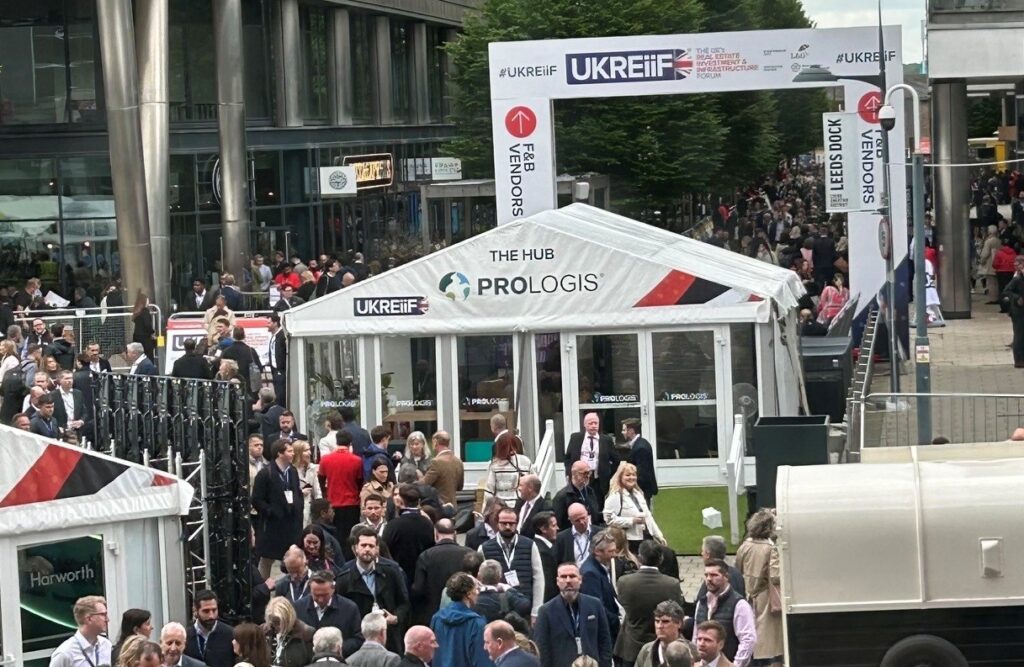
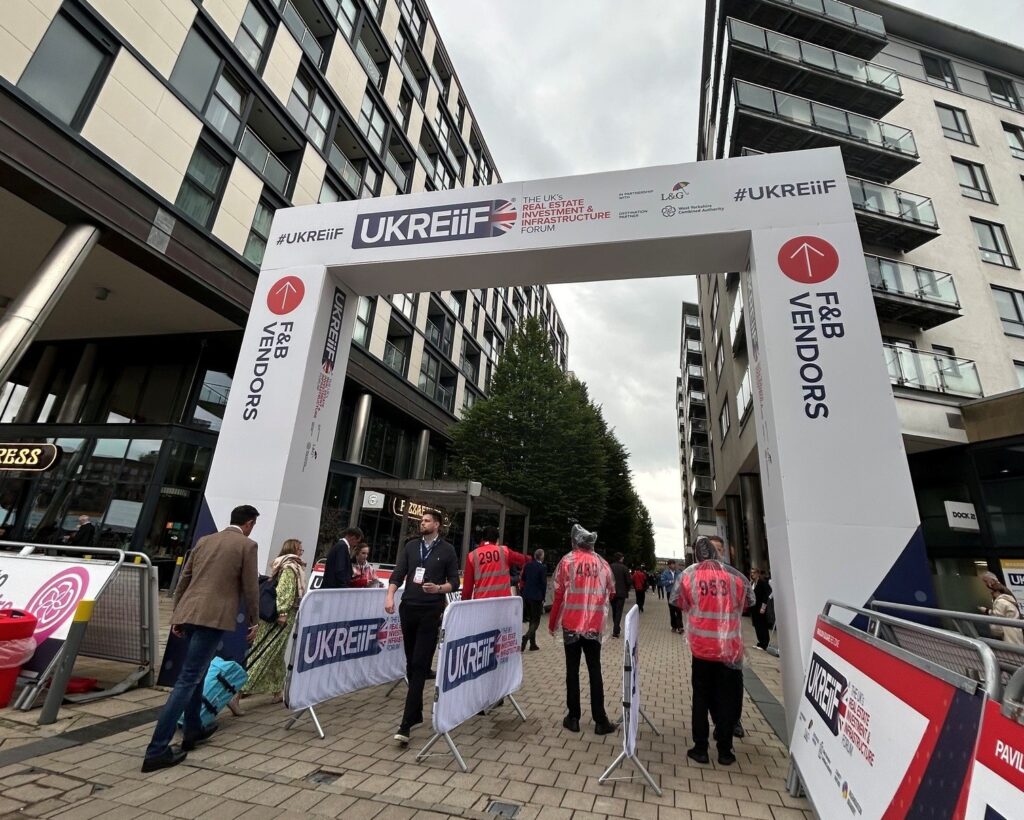
Starting the day in a drizzly Leeds Dock, the scale and energy of UKREiiF 2026 was immediately apparent. With more than 16,000 delegates expected across the three-day event, the conference has become far more than a real estate and infrastructure forum. It is now one of the UK built environment’s major stages for ideas, positioning and brand-building.
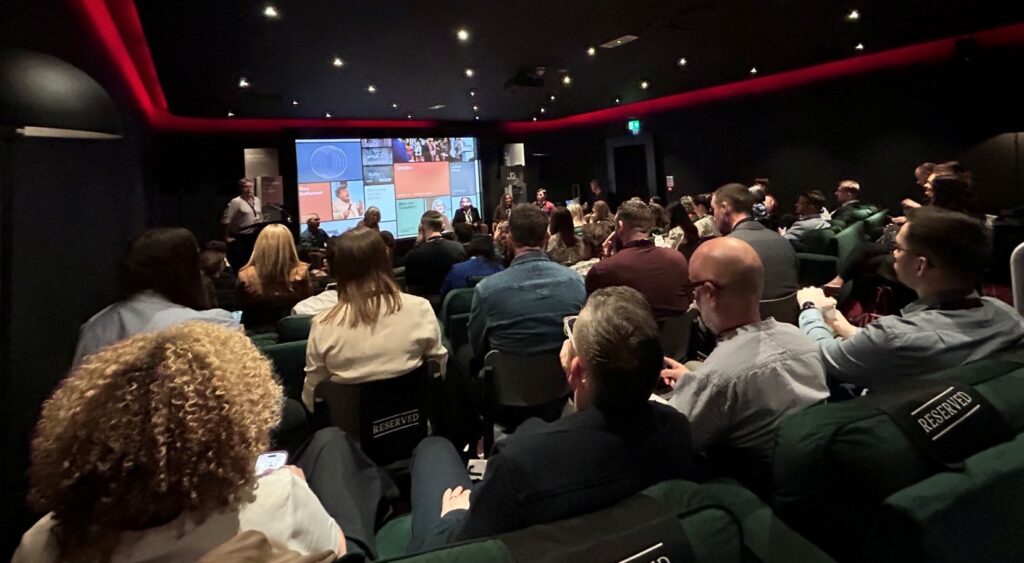
One of the first sessions I attended was a packed-out panel discussion at the J2 Marketing Day stream. It was encouraging to see marketing recognised as a discipline in its own right within a major industry event – not simply as a support function, but as something central to commercial success, investment and engagement.
A recurring question throughout the session was deceptively simple: who are we actually writing for?
Storytelling in a multi-stakeholder industry
Lisa von Tisleman, chairing the discussion, raised what was perhaps the most honest challenge for construction marketers: understanding audience in an industry where there is rarely just one.
Construction and real estate brands are expected to communicate with investors, local authorities, consultants, occupiers, contractors, policymakers and communities simultaneously. Creating a brand narrative that resonates across all those groups is no small task.
Tarah Gear of Milligan described marketers as “storytellers telling multiple stories”, while also offering one of the day’s most concise definitions of branding:
“What is a brand? It’s not a logo. It’s a promise.”
That idea of brand as something living and evolving continued throughout the discussion. Rather than viewing brands as static identities, speakers framed them as organic entities that exist before and after the people shaping them at any given moment.
Tarah also raised an interesting tension around the role of marketers as “brand editors” rather than “brand authors”. Editing what parts of a brand story are communicated can risk feeling selective or lacking integrity. But when storytelling is grounded in evidence, lived experience and action – rather than simply marketing language – the role of the marketer becomes less about fabrication and more about amplification.
Regeneration, pride and lived experience
Michelle May from the London Legacy Development Corporation brought a regeneration perspective to the discussion, reflecting on storytelling around East London and the Olympic Park.
“In regeneration,” she said, “we get to pick when the story starts. Start from a place of pride.”
It was a reminder that place-branding is often shaped by narrative framing as much as physical development. The stories chosen to define an area can influence how communities, investors and visitors engage with it.
Michelle also made a strong point about research and engagement, arguing that organisations should value lived experience more directly:
“Pay people money who have the best lived experience – not just drown in consultancy.”
For marketers, it was a useful challenge around authenticity, participation and how insight is gathered.
Brand as place
Another compelling contribution came from Mike Archer of AstraZeneca, who discussed the disconnect between corporate scale and public perception. Despite being one of the UK’s largest global businesses, AstraZeneca still only achieves moderate recognition as a British company.
Part of the company’s response has been to communicate brand through physical place and measurable impact.
Archer pointed to the AstraZeneca Discovery Centre in Cambridge – a £1.1 billion research facility housing thousands of scientists – as an example of architecture embodying brand values. The building’s transparency, including its glass-walled laboratories, was designed to physically express openness, collaboration and innovation.
It was a powerful reminder that, in the built environment sector especially, buildings themselves often become brand statements.
David Partridge, former chairman of Argent, reinforced this idea of brands as dynamic rather than fixed:
“Even for investor communications, you cannot think of branding as static. Why would investors want to be part of it if it was?”
The rise of experiential engagement
Away from the conference stages, some of the most interesting lessons came from the exhibition floor itself.
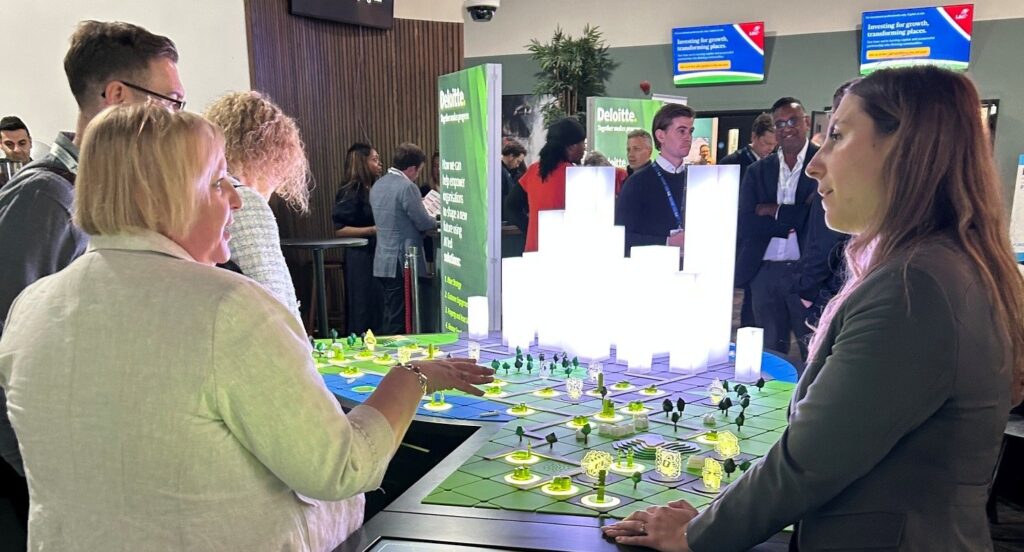
One of the standout activations of the day was Deloitte’s “Harmonic City” installation in the New Dock Exhibition Hall foyer. The experience gamified infrastructure strategy by encouraging visitors to think about urban systems holistically rather than in silos.
Physical model pieces representing housing, data centres, energy, heat networks and development could be removed and scanned using QR codes, triggering related case studies and project content on nearby screens.
What made the activation effective was not just the technology, but the clarity of purpose behind it. It translated a highly complex systems-thinking challenge into something tactile, accessible and memorable.
The experience demonstrated how gamification can move beyond novelty when it genuinely helps stakeholders understand complexity.
Making interaction meaningful
Elsewhere, smaller activations also offered useful lessons in engagement.
Social Value Portal invited delegates to publicly share social value pledges beneath its “Making social value count” messaging. The activation worked because the interaction aligned closely with the company’s core proposition and audience concerns.
Nearby, Cartwright promoted its “What’s the Big Idea?” initiative, which aims to gather insights and ideas generated during UKREiiF and associated fringe events. The concept was intentionally inclusive, encouraging participation regardless of seniority or professional background.
Meanwhile, The Procurement Hub demonstrated a practical but often overlooked aspect of exhibition strategy: visitor triage.
Its simple takeaway pocket guide allowed delegates to self-serve key information when stand staff were occupied elsewhere. In a crowded event environment where meaningful conversations can easily be missed, the activation balanced lead generation, information-sharing and user experience remarkably well.

More than a property conference
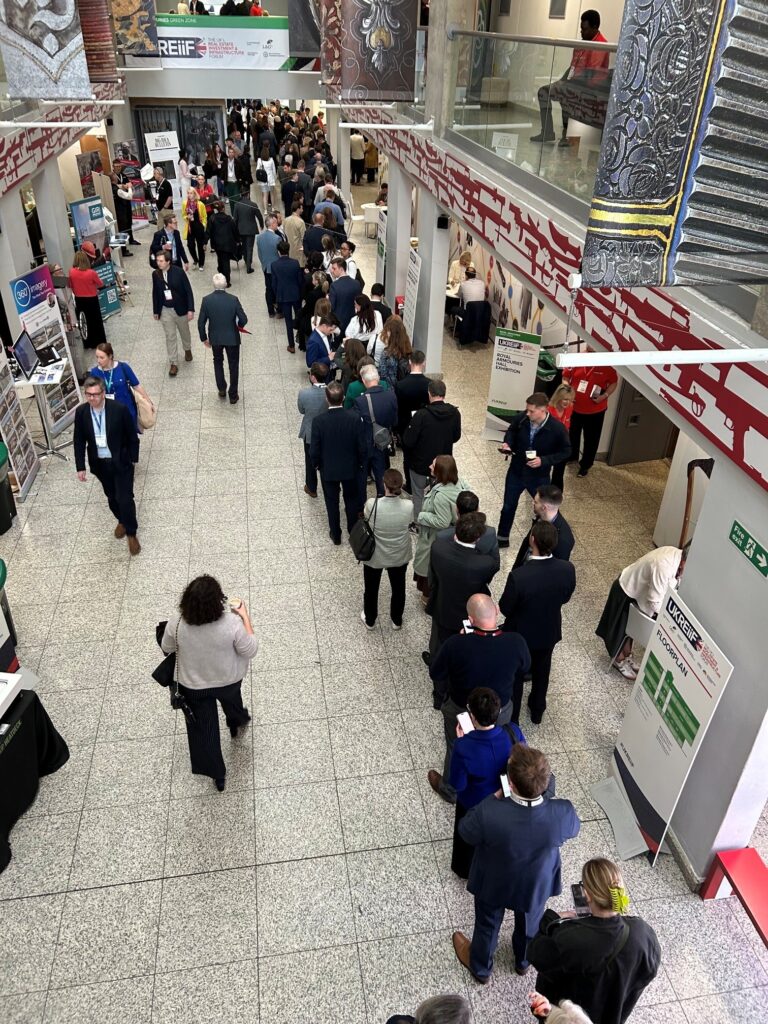
If there was any lingering doubt about the engagement levels at UKREiiF, the queues forming outside keynote sessions quickly answered it.
What stood out across the day was not just the scale of the event, but how sophisticated the communication strategies across the sector have become. From panel discussions about authenticity and audience complexity to highly considered experiential activations, storytelling increasingly sits at the centre of how organisations communicate value.
For marketers in the built environment, UKREiiF is no longer simply about visibility. It is about creating narratives, experiences and interactions that resonate across a deeply interconnected industry.