
David Pead, CBE Marketing Network
“People will say they got your number from the Yellow Pages,” said Emma Cox, recalling her early days working in radio advertising. “But actually, it was hearing it 30 times on the radio that made them reach for the Yellow Pages.”
The reference belonged to another era, but the problem felt entirely current.
At the first of the CBE Marketing Network’s curated sessions at UK Construction Week, marketers from across the construction sector gathered to discuss one of the industry’s most persistent challenges: how do you prove the commercial value of marketing when influence happens gradually, indirectly and often invisibly?
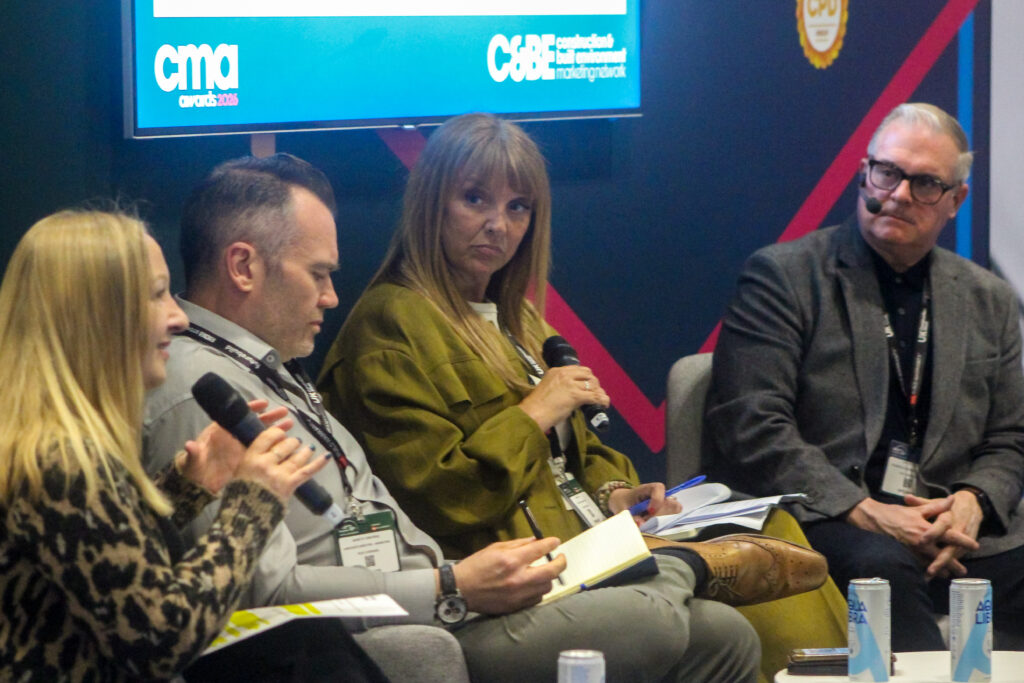
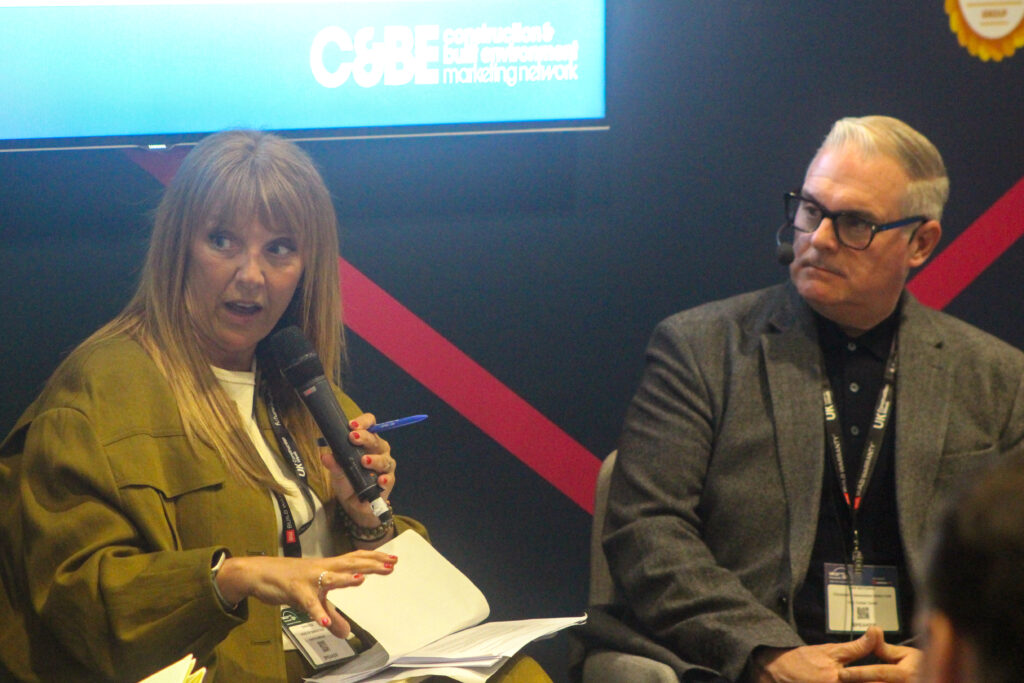
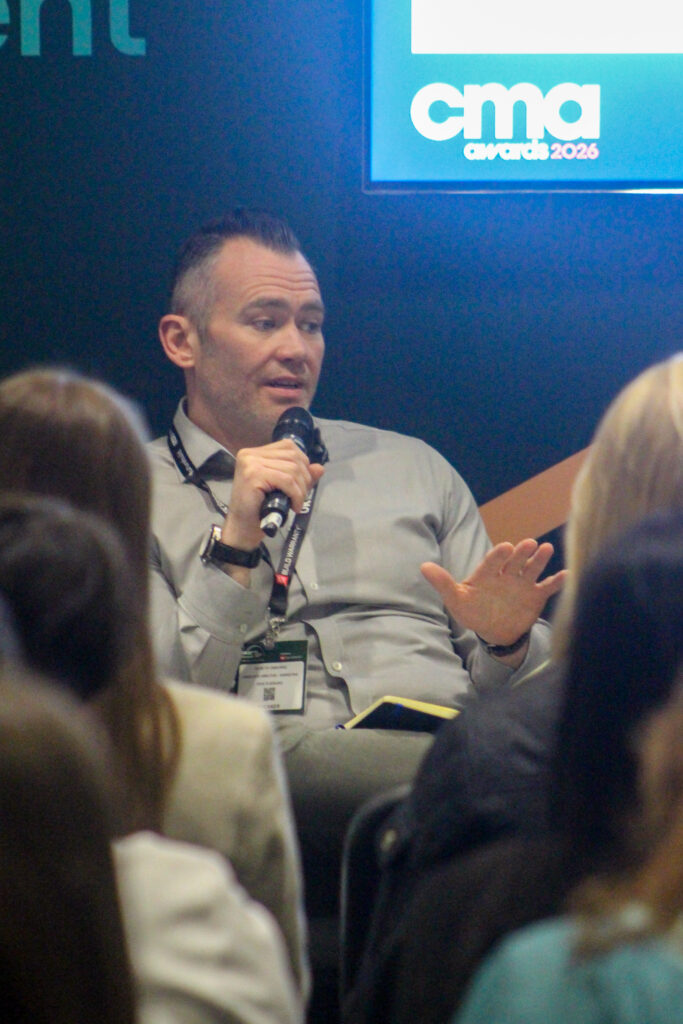
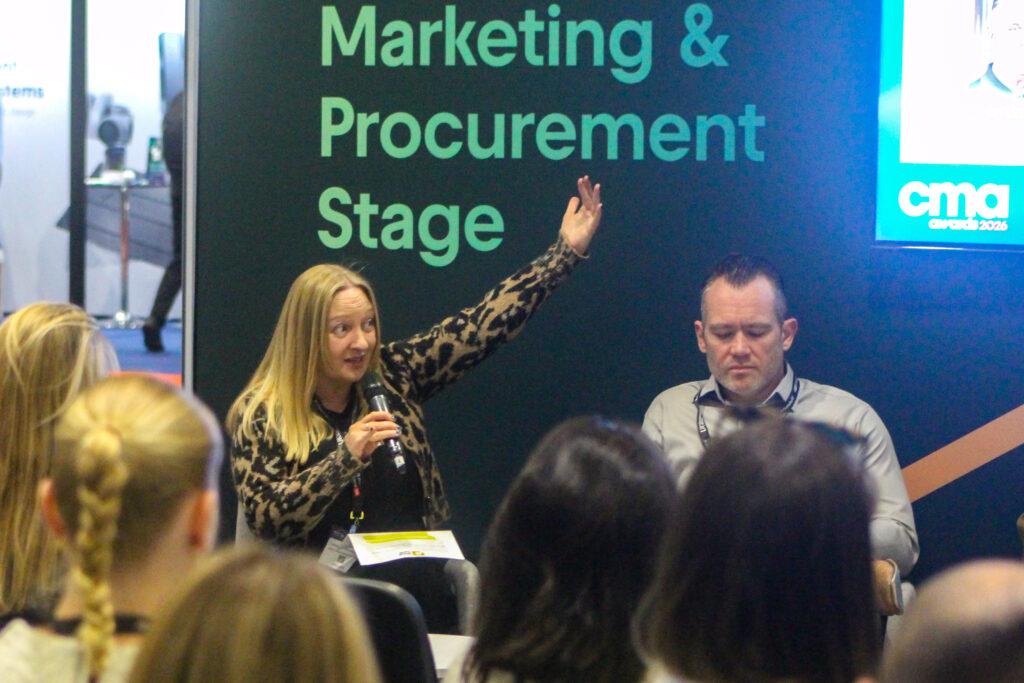
Chaired by Liam Bateman, Managing Director of The Think Tank, the session, From brand to pipeline: how marketing is driving revenue and growth in construction, brought together Gareth Osborne, Associate Director, Marketing at Pick Everard, Stacey Lucas, Commercial Marketing Director at Sontay, and Emma Cox, Head of Marketing at Watts Group.
Marketing before the sale
The panel began by acknowledging one of the realities of construction marketing. Buying cycles are long, decisions are relationship-led, and attribution is rarely simple.
For Emma, marketing’s role in driving revenue is often less about a single campaign converting directly into a sale and more about making the business easier to choose.
“In simple terms, making the business easier to trust and easier to see,” she said. “A lot of the revenue that drives in construction is way before the sale.”
Stacey made a similar point, arguing that marketing touches far more than campaigns. Packaging, customer service, reputation, training, technical support and the way people experience a business all form part of the marketing picture.
“It’s something you would very much miss if it wasn’t there,” she said.
Gareth framed the challenge slightly differently. Marketing may influence pipeline, brand and positioning, but that influence needs to be made visible internally, particularly to senior teams.
“The more senior they are, the more they’re interested in numbers,” he said. “It’s about communicating how the pipeline’s working from marketing activity, how we’ve influenced the pipeline, and linking back wins.”
From activity to authority
The most concrete examples came when the panel was asked how marketing had directly influenced commercial growth.
Stacey described Sontay’s training academy, which brings building controls engineers into the company’s own environment. The attendees are there to learn, but they are also immersed in Sontay’s products, literature, people and expertise.
In one case, engineers from Gatwick Airport attended a training session and asked about the company’s wireless sensing technology. That led to a demonstration, and ultimately to Sontay devices being used in parts of the airport including security and passenger areas.
For Stacey, it was a simple example of how reputation, authority and product visibility can come together.
“They came in, they saw our products,” she said. “They were already in that mindset, and then seeing the products we had to offer just completely connected.”
Emma offered a parallel example from Watts Group, pointing to the Watts Pocket Handbook, a long-established industry reference tool that continues to build authority and goodwill. It is not treated as a direct sales product, but as a reputation asset that keeps the business useful and visible.
“They are pockets of knowledge in a pocketbook that we give away,” she said.
Gareth highlighted Pick Everard’s Building Safety Act campaign, Alliance for Compliance, which combined targeted content and CPD activity to engage audiences dealing with compliance challenges.
“I really think good marketing is about right place, right time,” he said, adding that the campaign had generated “a very significant amount of pipeline” and had already led to revenue.
The middle of the funnel
The discussion then turned to where marketing adds most value. While awareness and positioning remain important, the panel agreed that the middle of the funnel is often where marketing needs to work harder.
Emma argued for “targeted influence” as early as possible, rather than simply identifying pain points and responding to them. Stacey described mid-funnel nurturing as the place where relationships deepen and customers begin to want to work with a business.
For Gareth, the difficulty is consistency.
“When you get into that mid-nurture and you’ve got different segments you’re targeting, it’s quite a lot of work,” he said. “You need to be consistent, but you also need to have relevant content that engages.”
That, in turn, raised a warning about the growing volume of AI-generated content.
“I prefer quality over quantity,” said Gareth. “It just doesn’t engage the audience.”
Joining up the business
A recurring theme was marketing’s ability to connect parts of the organisation that do not always speak to each other.
Stacey described the challenge of aligning specification activity, CPDs, sales teams and distribution partners when the buying cycle may run for two years or more. Emma contrasted product-based marketing with professional services, where technical expertise often sits with specialists who may not be ready or confident to present it publicly.
In that context, she said, marketing’s role is often to make sure expertise does not remain trapped in silos.
“My biggest role in professional services is tying them all together and making sure that they’re not working in silos,” she said.
Liam also reflected on the importance of internal connectivity, recalling a meeting with a paint manufacturer where the marketing manager brought salespeople into the room to feed directly into the campaign discussion.
“Breaking down those silos is so, so important,” he said.
Proving value without perfect attribution
Measurement was never far from the discussion.
Emma warned against reporting metrics without context. “Anything you report on should change behaviour,” she said. Boards may ask for everything, but marketers need to explain what matters and why.
Stacey said she had been asked to condense her reporting to one page, but still uses metrics as an educational tool. Training performance, social media results and the ongoing value of printed technical literature all play a role. For Sontay, even knowing whether customers still keep a catalogue on their desks can matter.
“If they’ve got our catalogue on the desk and they quickly flick through and find it, that’s a win for me,” she said.
For Gareth, attribution remains the hardest part.
“It’s my number one challenge,” he said. “It’s great to report campaign engagement and campaign stats, but the higher I go up in the business, the more commercially focused that conversation needs to be.”
He argued that marketing in construction needs to move from being seen as a cost centre to a profit centre.
“When investment comes, there’s a much easier conversation,” he said. “Or when business needs to cut back, the argument then is, well, we’re actually a profit centre.”
Facts, not fiction
Asked for one piece of advice on becoming a more commercial marketer, Gareth was direct.
“For me, it’s facts, not fiction,” he said. “The people that we want to influence at the top of the business are not interested in fluff. They’re interested in numbers. They’re interested in commercial. They’re interested in ROI.”
He also argued that marketing leaders need to get better at internal PR.
“It’s not just the actual job,” he said. “Marketing leaders need to be good at internal PR with this stuff.”
Emma’s advice was equally straightforward: “Understand revenue, understand your clients, understand the operations. Absolutely get yourself involved with everything.”
Stacey agreed. “Learn and immerse yourself,” she said. “Immerse yourself in your business, immerse yourself in the industry, immerse yourself in the product.”
AI, transparency and judgement
Audience questions extended the discussion into AI, transparency and budgeting.
On AI, the panel was pragmatic. Stacey described Sontay’s implementation of a chatbot after rigorous testing, particularly to support international customers and help users find product information. Emma said Watts had developed an internal tool to search capability statements and case studies for bids. Gareth said Pick Everard is using AI mainly for research and early-stage production, but still relies on human judgement for final outputs.
“I would hate people to look at our content and go, ‘There’s been some AI on that,’” he said.
The question of transparency prompted an interesting discussion about how much expertise organisations should give away. Emma said her view is to share it.
“If you’re not, somebody else will,” she said.
Gareth acknowledged the tension between demonstrating expertise and giving away too much. Stacey said the decision often comes down to judgement.
“That’s where AI can’t make that call for you,” she said.

A more mature conversation
The session did not pretend that construction marketing has solved the problem of proving commercial value. It showed something more useful: that the conversation is becoming more mature.
Marketing is not simply being asked to create awareness or produce activity. It is being asked to understand markets, influence decisions, support bids, build trust and demonstrate contribution to growth.
For construction marketers, that raises the bar. But it also strengthens the case for marketing as a central commercial function, rather than a supporting service.